+1 646-926-2949
 +91 954-054-7507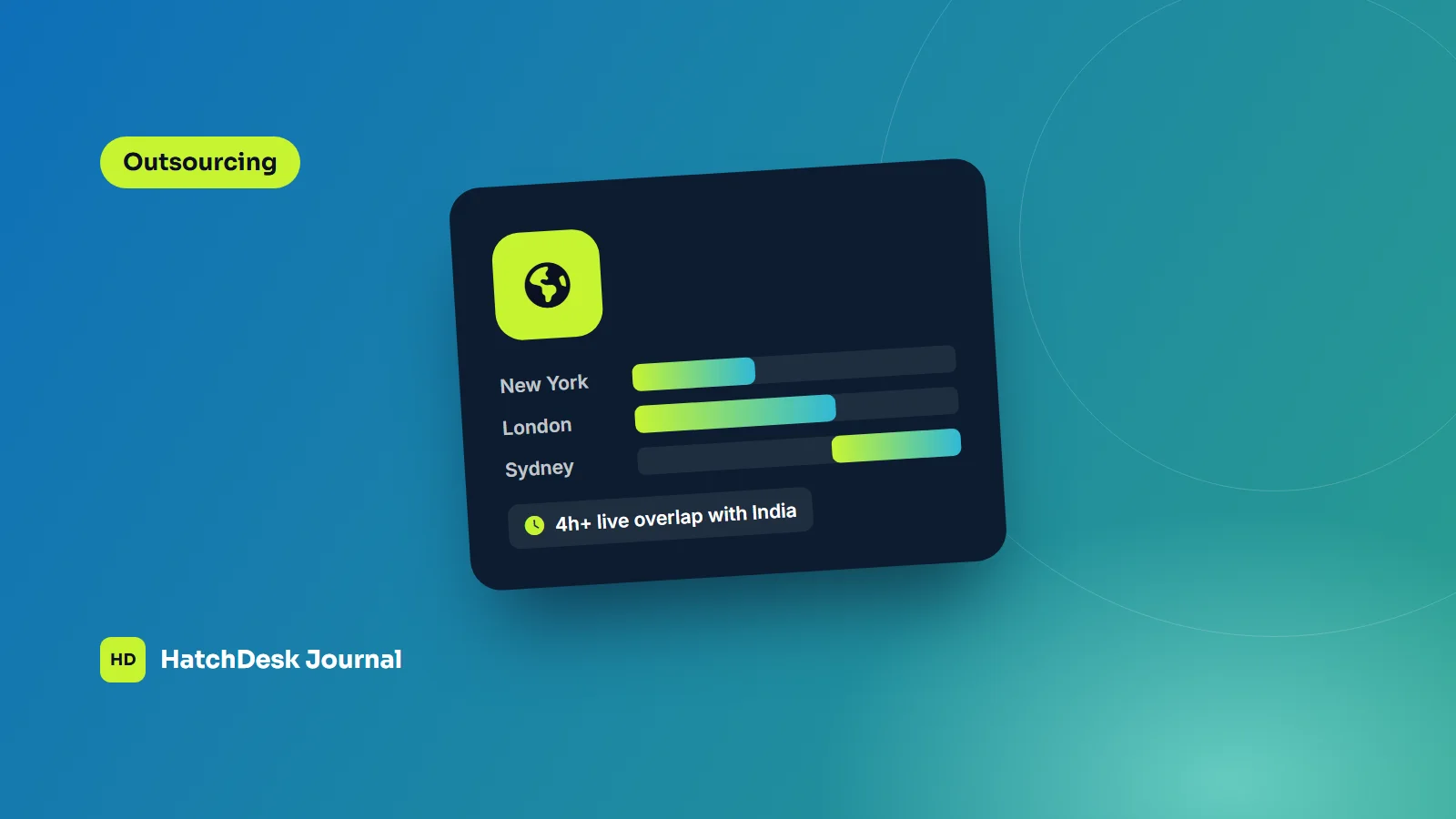
Price is usually the reason a company in the US, UK, Europe or Australia first looks at an offshore team in India. Whether it works out depends on other things: how much of the working day you share, how decisions get made when you are asleep, what the contract says about your code and data, and how you start. This guide covers each of those, so you can set up an offshore development team that runs smoothly from the first sprint.
Time zones: how much overlap you really get
India runs on a single time zone, IST (UTC+5:30), and does not change its clocks. Your overlap depends on where you are and on the season:
- UK and Ireland: India is 4.5 hours ahead in British summer time and 5.5 hours ahead in winter. A normal Indian working day overlaps your morning and lunch by about five hours, with no shift change needed.
- Central Europe: India is 3.5 to 4.5 hours ahead. This is the easiest region to work with, with five or more hours of shared time.
- US East Coast: India is 9.5 to 10.5 hours ahead. A team on a shifted day, for example 2pm to 11pm IST, gives you about four hours of overlap in your morning.
- US West Coast: overlap is short, usually one to two hours early in your day. Teams that work well here rely on clear written updates and keep live calls short and planned.
- Australia: Sydney and Melbourne are 4.5 to 5.5 hours ahead of India. Your afternoon overlaps the Indian morning by about three to four hours.
Ask any vendor exactly which hours their engineers work and whether that is written into the contract. "We are flexible" is not an answer. At HatchDesk, the team's shift is set to give at least four hours of live overlap with the US East Coast, UK and Europe.
Make the time difference work for you
The gap between time zones can speed up delivery instead of slowing it down. If you review work at the end of your day, the offshore team can act on your feedback while you sleep, so the fix is waiting for you in the morning. To get that effect:
- Write tickets with acceptance criteria, so nobody has to wait for an answer to start.
- Agree on a daily written update: what was done, what is next and what is blocked.
- Keep one shared stand-up inside the overlap window, 15 minutes, every day.
- Put the build on a staging link, so you can check progress whenever you like.
- Name one decision maker on your side for each area, so questions do not bounce around.
Communication that does not depend on luck
Most offshore problems are communication problems. A few habits prevent them:
- One accountable lead on the vendor side who speaks for the team and owns delivery.
- Work in your tools: your Slack or Teams, your Jira or Linear, your GitHub or Azure DevOps. You keep the history if the relationship ends.
- A demo of working software at the end of every sprint, not a status slide.
- Engineers who can ask questions directly. If every question goes through an account manager, details get lost.
- Interview the actual engineers before they start, not only the sales team.
Contracts, IP and NDAs
Before any code is written, make sure the paperwork protects you:
- A mutual NDA, signed before you share business details.
- A clause that assigns all intellectual property in the code, designs and documents to you, on payment.
- Code in repositories you own from day one, with the vendor working as a contributor.
- A clear notice period and a handover plan, so you are never locked in.
- An agreed governing law and a way to resolve disputes. Many international clients choose their own jurisdiction, and a serious vendor will accept that.
Data protection and security
If your software handles personal data of people in the EU or UK, GDPR still applies when the developers are in India. India does not have an EU adequacy decision, so transfers are usually covered by the European Commission's Standard Contractual Clauses (or the UK's equivalent) in a data processing agreement.
Good practice that you should expect from any offshore team:
- Production data stays in your cloud account; developers work with test or masked data.
- Access through individual accounts with multi-factor authentication, removed the day someone leaves the project.
- Secrets in a vault, never in code or chat.
- Company-managed laptops with disk encryption.
Payments and invoicing
Most Indian agencies invoice international clients in USD, GBP or EUR, monthly for dedicated teams or per milestone for fixed-price work. Under India's GST rules, software services exported to clients abroad are generally zero-rated, so you should not see Indian sales tax added to the invoice. Ask for clear rates per role and a written list of what is included, such as project management, QA and code review. Our pricing page shows how we price each engagement model.
Plan for holidays and handovers
Indian public holidays differ from yours. The main ones, such as Diwali, Holi and Independence Day on 15 August, should go into the shared calendar at the start of the year, along with your own holidays. Ask how the vendor covers sick leave and resignations: a team of two or more engineers with shared code ownership is far safer than one person who knows everything.
Choose the right engagement model
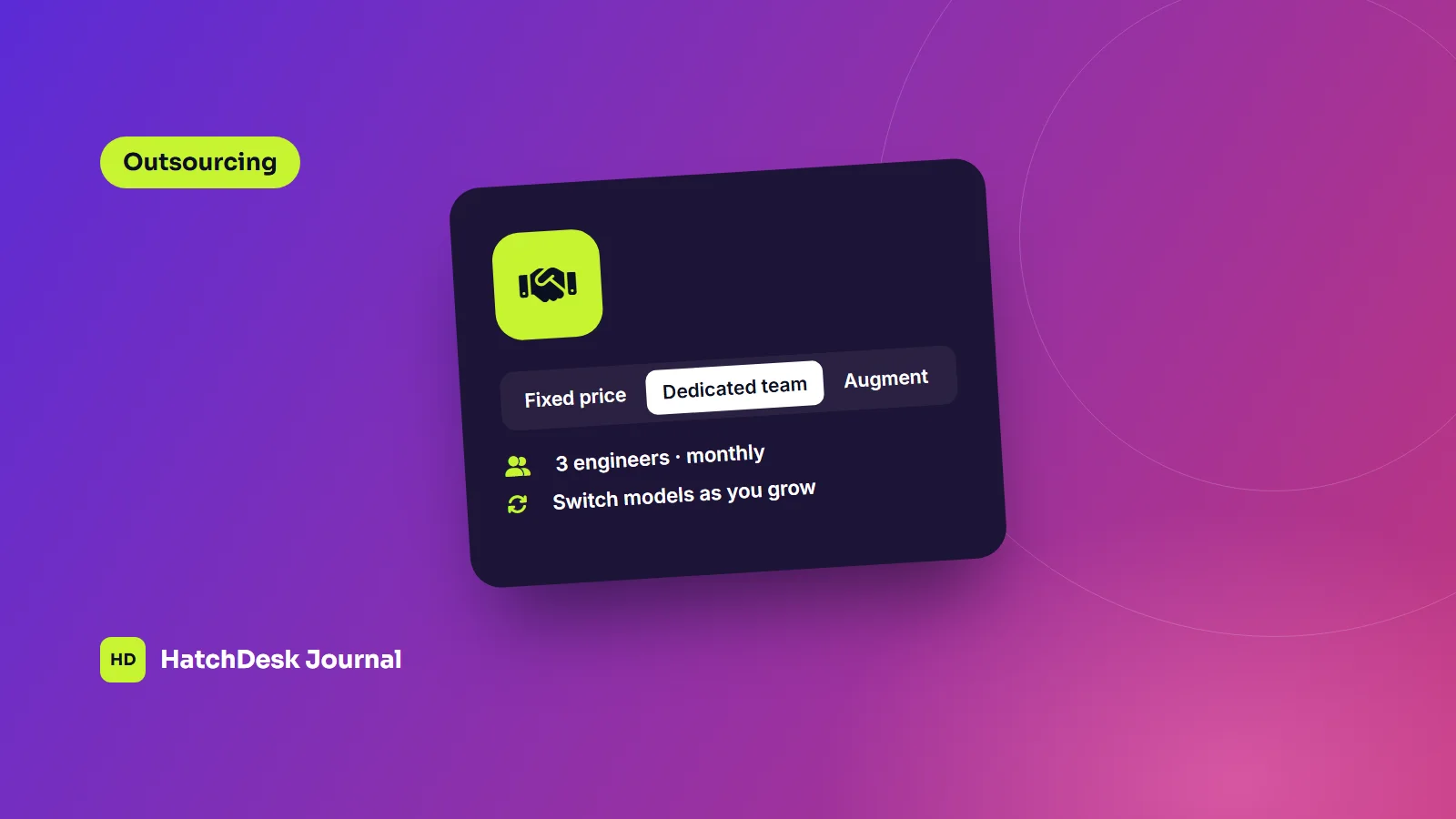
How you contract the team matters as much as where it is:
- Fixed price suits a well-defined first release with a clear scope.
- A dedicated team suits a product that will keep changing, where you want engineers who learn your domain.
- Staff augmentation suits teams that already have a tech lead and only need more hands.
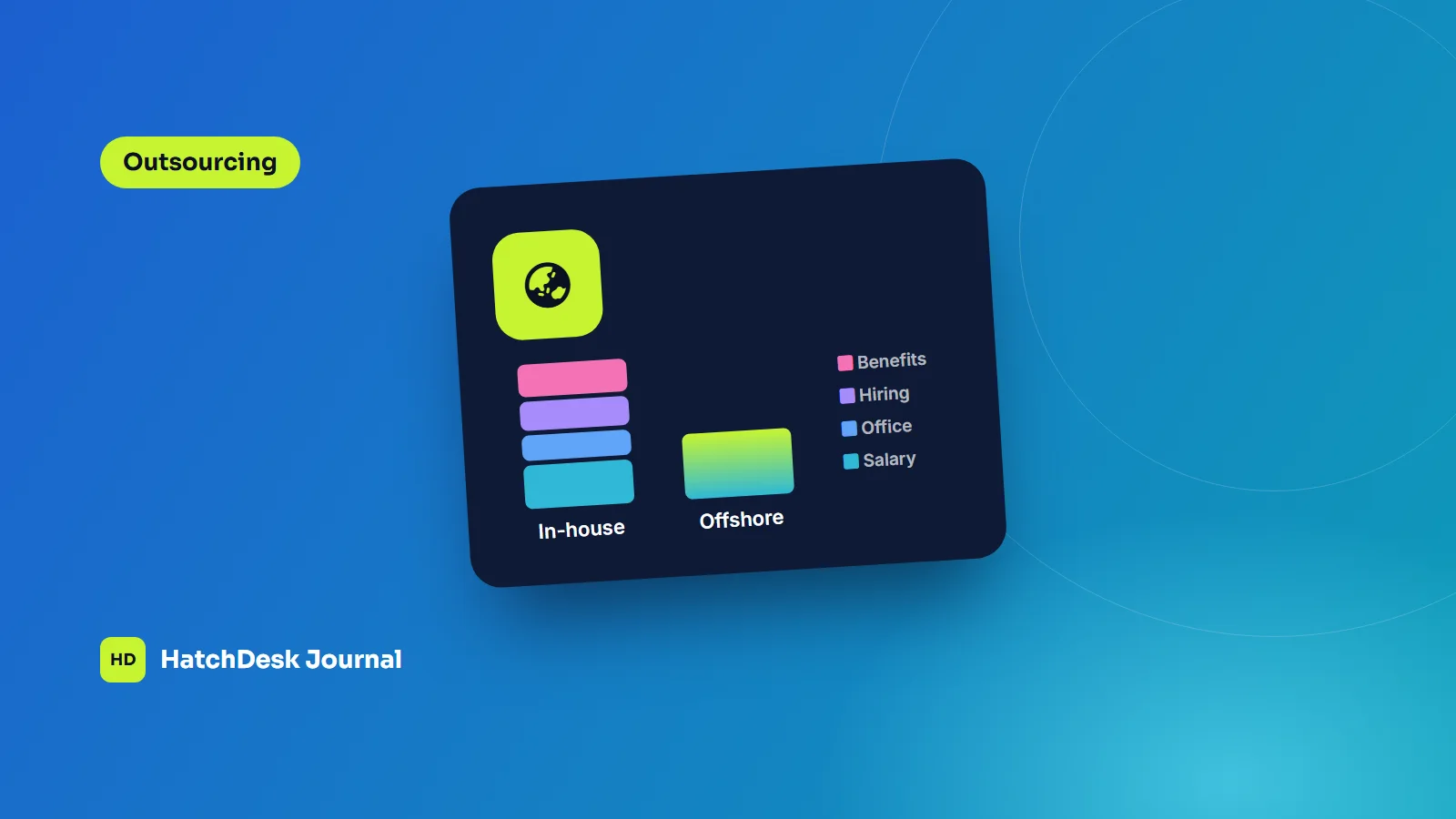
Our comparison of dedicated team, fixed price and staff augmentation explains when each one fits, and our offshore vs in-house cost comparison shows where the savings really come from.
Start small, then scale
The safest way to start with a new offshore partner is a short paid pilot: one or two sprints on a real but contained piece of work. By the end you will know how the team communicates, how good the code is and whether the overlap hours suit you, without a long commitment. If it goes well, grow the team from there.
Working with HatchDesk
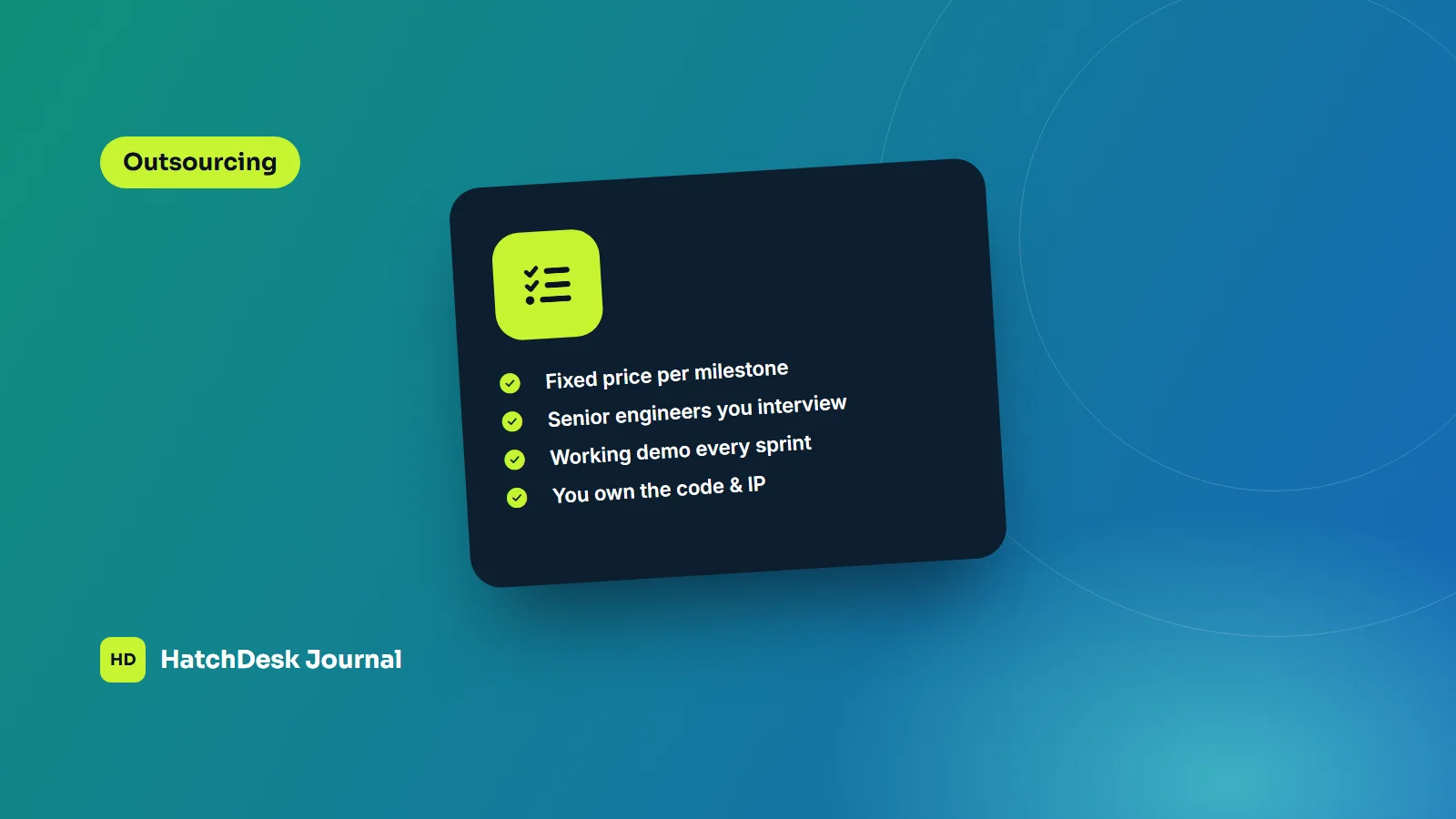
HatchDesk is an offshore software development company in Noida, India. Since 2018 we have built software for clients in the US, UK, Europe and Australia, as fixed-price projects and as dedicated teams that join your stand-ups. You interview every engineer, you own the code and IP, and you see working software every sprint. If you already know the role you need, you can hire .NET developers or hire full stack developers directly.