+1 646-926-2949
 +91 954-054-7507
When you work with a software development company, the engagement model matters as much as the team. Pick the wrong one and you either pay for flexibility you do not need or get locked into a scope that no longer fits. The three common models are staff augmentation, a dedicated team and a fixed-price project. This guide explains each one, compares staff augmentation vs a dedicated team head to head (the choice most companies get stuck on), and shows how to switch between models as your product grows.
The short answer
- Choose staff augmentation if you already have a tech lead and only need more hands or a missing skill for a few months.
- Choose a dedicated team if you have an ongoing product roadmap and want engineers who stay, learn your domain and own delivery, without hiring locally.
- Choose a fixed-price project if you have a clearly defined release, a budget that must be approved up front, and little time to manage developers.
Fixed-price projects
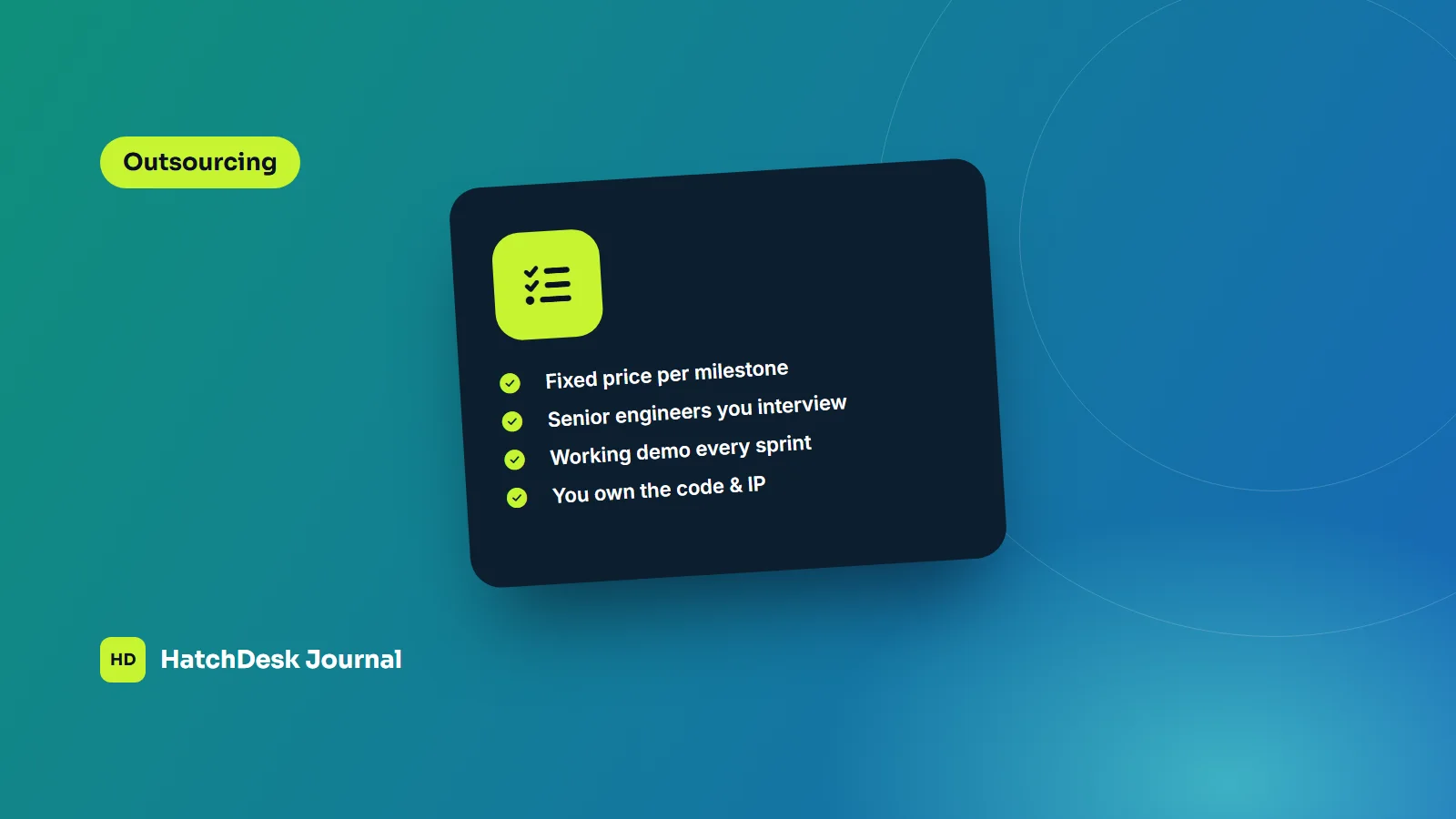
You agree a defined scope, and the agency delivers it for one price, usually split into milestones that you pay for on delivery.
Best for:
- A clearly defined first release or MVP.
- Projects with a fixed budget that has to be approved up front.
- Teams that do not want to manage developers day to day.
Watch out for vague scope. A good agency will insist on a short discovery phase before quoting, so the price reflects what you actually need. Changes after sign-off go through a change request, which keeps the budget honest but makes fixed price a poor fit for products that change every sprint.
Dedicated development team
One or more engineers work only on your product, inside your tools and rituals, billed monthly. You set priorities; the agency handles hiring, equipment, HR and replacement. A dedicated team usually comes with its own lead, QA and delivery process, so it can run a whole product area without you managing each person.
Best for:
- Products with an evolving roadmap.
- Companies that want a long-term team without local hiring.
- Work that needs continuity and product knowledge.
This is the most common model for offshore development, and it is usually the most cost-effective per hour over the long run, because the team builds up knowledge of your code instead of relearning it.
Staff augmentation
You add individual developers to your existing in-house team to fill a skill gap or increase capacity. They join your stand-ups, follow your processes and report to your engineering manager. The vendor supplies and replaces the people; you direct the work.
Best for:
- Teams that already have engineering leadership.
- Short-term capacity for a launch or a migration.
- Specific skills, such as .NET, React or AI, that your team lacks.
You can hire individual developers by role, from .NET developers and full stack developers to React, Angular, Node.js and Python.
Staff augmentation vs dedicated team: the key differences
Both models give you engineers who work only on your product, so they are easy to confuse. The difference is who owns delivery.
- Who manages the work: with staff augmentation, your managers assign tasks and review output. With a dedicated team, the vendor's team lead runs day-to-day delivery against the priorities you set.
- Who is accountable for results: augmented developers are accountable for their tasks; a dedicated team is accountable for shipping features, quality and deadlines.
- Team shape: augmentation is usually one to three individuals slotted into your squads. A dedicated team is a complete unit, often developers plus QA, a lead and part-time design or DevOps.
- Duration: augmentation often runs for a few months to cover a peak or a skill gap. A dedicated team is built for a year or more.
- Process: augmented developers adopt your process as it is. A dedicated team brings a working process (sprints, code review, CI/CD, demos) and adapts it to you.
- Management effort for you: higher with augmentation, because you plan and review their work. Lower with a dedicated team, once the backlog and priorities are clear.
- Knowledge retention: both keep knowledge inside the engagement, but a dedicated team also documents and spreads it across several people, so one resignation does not stall the product.
- Cost: rates per engineer are similar. A dedicated team costs more in total because it includes roles such as QA and a lead, but you save the in-house management time that augmentation needs.
A simple test: if you could hand the work to the vendor with a backlog and a demo every two weeks, you want a dedicated team. If you need people who will sit inside your existing team and take tickets from your tech lead, you want staff augmentation.
Dedicated team vs fixed price
- Scope: fixed price needs scope agreed before work starts; a dedicated team works from a backlog you can change every sprint.
- Budget: fixed price gives you one number per milestone; a dedicated team gives you a predictable monthly cost with flexible output.
- Risk: with fixed price the vendor carries the risk of underestimating; with a dedicated team you carry the risk of shifting priorities, and you gain the freedom to make those shifts.
- Best moment: fixed price for a first release or a well-understood module; a dedicated team once the product is live and real users drive the roadmap.
Comparing the three
- Control: highest with staff augmentation, lowest with fixed price.
- Budget certainty: highest with fixed price.
- Flexibility: highest with a dedicated team or augmentation.
- Management effort for you: lowest with fixed price, highest with augmentation.
- Speed to start: augmentation and fixed price can start within days; a dedicated team takes a little longer to assemble the right mix of roles.
Which model fits your company
- Early-stage startup without a CTO: start with a fixed-price MVP, then move to a small dedicated team after launch.
- Funded startup or scale-up with a product team: a dedicated team for a whole product area, plus augmentation for short peaks.
- Company with a strong in-house engineering team: staff augmentation to add a missing skill, such as .NET migration or AI integration.
- Non-technical business with a defined project: fixed price, with a short paid discovery phase first.
You do not have to choose forever
Many of our clients start with a fixed-price first release, then continue with a dedicated team once the product is live and the roadmap is driven by real users. Others start with one augmented developer and grow it into a full team. A good vendor makes these switches easy: same engineers, same repositories, a new contract.
Questions to ask any vendor before you sign
- Who on your side is accountable for delivery, and will I meet them before we start?
- Can I interview the engineers who will actually work on my product?
- What happens if an engineer leaves or is not a good fit, and how fast is the replacement?
- Who owns the code and IP, and does the code live in my repositories from day one?
- What notice period applies if I want to scale down or switch models?
Frequently asked questions
Is staff augmentation cheaper than a dedicated team?
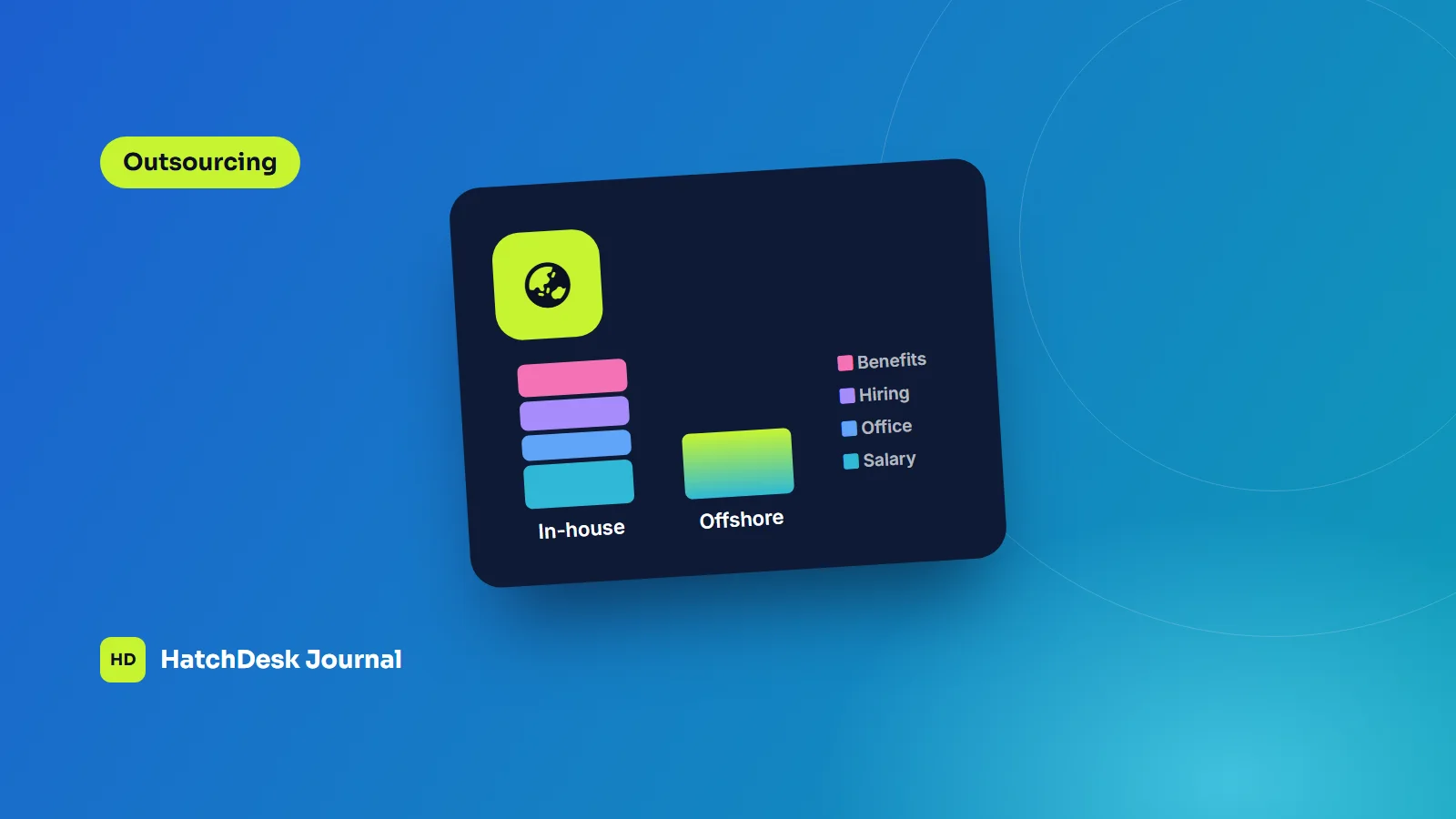
Per engineer, the rates are usually similar. Staff augmentation looks cheaper because you pay only for developers, but you supply the management, QA and process yourself. A dedicated team includes those roles, so compare the total cost of getting features shipped, not the hourly rate alone.
Can I switch from staff augmentation to a dedicated team?
Yes. A common path is to start with one or two augmented developers, then add a lead and QA once the work grows, turning them into a dedicated team without losing the knowledge they have built.
Which model is best for an offshore team in India?
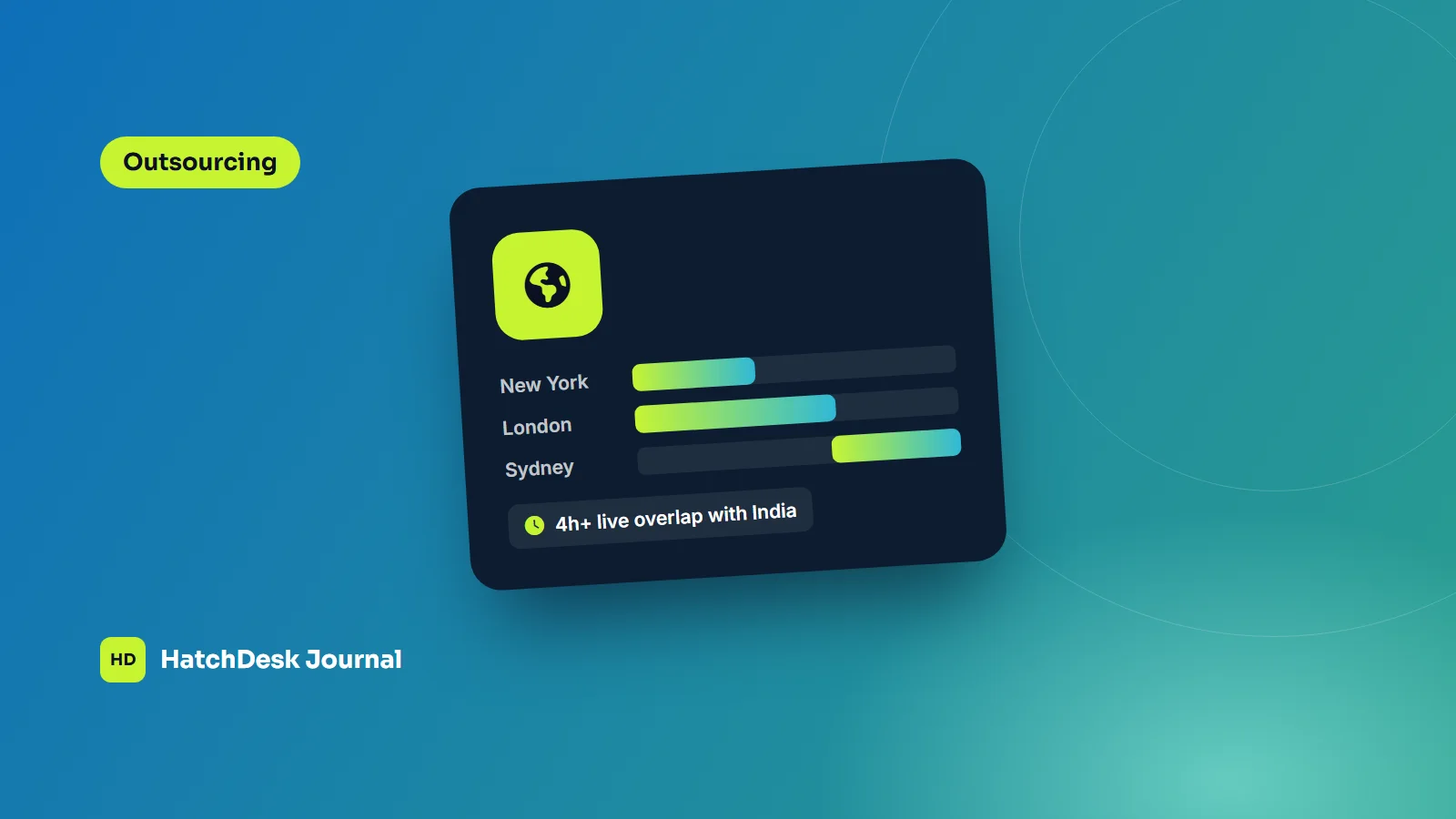
For long-term product work, a dedicated team is the most common choice, because it handles time-zone gaps with its own lead and written updates. Staff augmentation works well when your team overlaps enough hours with India to manage developers directly. Our guide to working with an offshore team in India covers overlap hours by region.
How we work at HatchDesk
We offer all three models and help you pick the one that fits, with a two-week risk-free trial on dedicated teams and augmented developers. Our pricing page shows rates and what is included in each model, our offshore vs in-house cost comparison shows where the savings come from, and our offshore software development page explains how we make remote teams work across time zones.